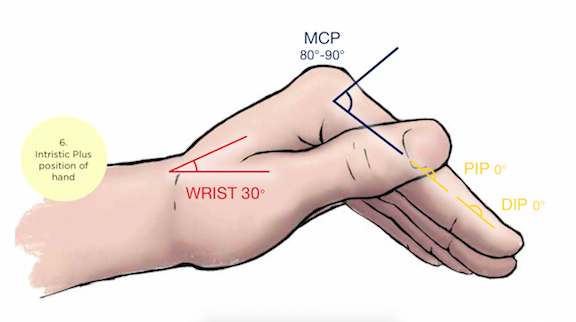
Wrist Fracture

Good summary of the major points to think about when dealing with a distal radius/ulnar fracture: https://epmonthly.com/article/distal-radius-fractures-reducing-the-confusion/

-Consider the pt factors (age, hand dominance, activity level/profession) with ideal aim to get anatomical alignment of fracture reduction

-Consult ORTHO –> document your reduction to reduce further damage preferable to waiting until specialist evaluation

EKG Random tips

  • Check first for lead placement: AVR and AVL should be mirror images
  • Limb leads: (a) check aVR for upside down P, QRS and T waves, (b) aVL and aVR should generally be mirror images.
  • Chest leads: look for RS pattern in V1 – changing progressively to QR pattern in V6.

Reference: https://litfl.com/ecg-rule-of-fours/

EKG Basic Interpretation Video

EKG = Hypokalemia

  • Flattening of T wave and appearance of U wave directly after
  • V2 and V3 usually
  • Can appear as prolonged QT due to U wave, treat similarly
  • NOT ACS/Ischemia.
  • “reverse wellens or Nikelkam twave”

Info from Amal Mattu EEM 2019: Hypokalemia: You thought you knew how to recognize it

Random Radiology Stuff

Schmorl’s node: An upward and downward protrusion (pushing into) of a spinal disk’s soft tissue into the bony tissue of the adjacent vertebrae. Schmorl’s nodes, which are common, especially with minor degeneration of the aging spine, are detectable via X-ray as spine abnormalities.

Elevated BP

Immediately put in their ED diagnosis list “Elevated blood pressure without history of hypertension.”  Populate their discharge instructions with the following phrase…
Your blood pressure was noted to be elevated on today’s evaluation. This does not mean that you have chronic high blood pressure as it could be related to the events which led to your emergency department visit. However, I recommend that you check your blood pressure a few times a day, keep a record of the readings, and take this log to your primary care provider on the next appointment.** At that time, you and your primary care provider can discuss any further action that needs to be taken.

ACE-I Poisoning Antidote

Severe ACE Inhibitor Poisoning: Try Naloxone

ACE Inhibitor toxicity can result in severe bradycardia and profound hypotension. Consider naloxone to treat ACEI poisoning, especially in cases of severe hypotension in which aggressive administration of IV fluids would be a concern. Use of naloxone in this setting may also avoid the need to employ vasopressive support and pacing.

Several distinct families of endogenous opioids have been identified, with the most well-characterized being the endorphins, enkephalins, and dynorphins. Enkephalins have direct effects on blood pressure, heart rate, and the baroreceptor reflex. ACE inhibitors inhibit the metabolism of enkephalins thus potentiating their opioid effect which includes lowering of blood pressure. Administration of naloxone has been shown to increase blood pressure in ACE inhibitor overdoses.

References:
(1) Robert M, et al. Am J Emerg Med. 2019 Mar 28. [Epub ahead of print]
(2) Lip GY, et al. J Hum Hypertens. 1995 Sep;9(9):711-5.
(3) Varon J, et al. Ann Emerg Med. 1991 Oct;20(10):1125-7.
(4) Maryland Poison Center, toxtidbits. January 2012. http://www.mdpoison.com

Cervical Spine Collar Clearance in the Obtunded Patient

Clearing the Cervical Spine In The Obtunded Patient

In the alert asymptomatic trauma patient who meets the NEXUS or Canadian C-spine Rule criteria, the cervical collar can be safely removed without imaging (1). The obtunded patient who is not examinable poses a difficult clinical situation. What is required to safely remove the cervical collar? Emergency Physicians routinely face this issue. It might be instructive to review the current recommendations from the Trauma Societies and the practice at large trauma centers.

The Eastern Association for the Surgery of Trauma conditionally recommends cervical collar removal after a “negative high-quality C-spine CT scan result alone” (1,2). Although MRI had been advocated for these patients in the past, new literature has concluded MRI “had a lower health benefit and a higher cost compared with no follow-up after a normal CT finding in patients with obtunded blunt trauma to the cervical spine, a finding that does not support the use of MRI in this group of patients” (3).

The Western Trauma Association conducted a multi-institutional study with more than 10,000 patients and concluded “if the CT is adequate and negative, the collar may be removed with a low risk of clinically significant injury” (4). In this large study, there were 3 false-negative CTs (0.03%) that missed a clinically significant injury, but all had exams consistent with central cord syndrome. The conclusion is that that MRI remains valuable only for “the patient who arrives with motor or sensory neurologic deficits or without witnessed movement of all extremities.”

At Bellevue Hospital in New York City, for example, policy now exists to clear the obtunded patient with a negative cervical spine CT alone (1).

References:
(1) Bernstein MP, et al. Radiol Clin North Am. 2019 Jul;57(4):767-785.
(2) Patel MB, et al. J Trauma. 2015;78: 430-441.
(3) Wu X, et al. JAMA Surg. 2018; 153: pp. 625-632.
(4) Inaba K, et al. J Trauma Acute Care Surg. 2016;81:1122-1130.

Steroids for CAP

Steroids For CAP Patients Who Are Admitted

Current data demonstrate that for adult patients with severe community-acquired pneumonia corticosteroids reduce morbidity and mortality (1-3). For pediatric patients and adults with non-severe CAP who are admitted to the hospital, corticosteroids appear to reduce morbidity, but not mortality.

The use of corticosteroids has also demonstrated to cause a reduction in early clinical failures, time to clinical cure, length of overall hospital stay, total ICU days, development of respiratory failure or shock, and rates of pneumonia complications in adults with severe CAP.

It must be noted that the data for children is based on small studies and the mortality event rate was low.

Most adult studies used a corticosteroid dose equivalent to 40 – 50 mg of prednisone/day for 7 days.

A December, 2017 Cochrane review found that for adults with severe CAP, the number needed to treat with corticosteroids was 18 patients to prevent one death (1).

(Note that studies of neonates, Pneumocystis jiroveci pneumonia, and HIV patients were excluded from meta-analyses evaluating this topic).

References:
(1) Seagraves T, et al. Ann Emerg Med. 2019 Jul;74(1):e1-e3.
(2) Pliakos EE, et al. Chest. 2019 Apr;155(4):787-794.
(3) Stern A, et al. Cochrane Database Syst Rev. 2017 Dec 13;12:CD007720.

CHF Patients

The Hypotensive CHF Patient: Mistakes I Have Made

Few things in medicine are as educational as reviewing the mistakes of colleagues.  Dr. Peter Deblieux of the Departments of Pulmonary and Critical Care Medicine and Emergency Medicine at the University Medical Center in New Orleans recently gave a lecture on “Treating the Hypotensive Heart Failure Patient”.  This is a difficult patient to manage in the ED. This lecture will be posted shortly on EMedHome.com as part of the University of Maryland Department of EM’s Cardiology Conference lectures.

Dr. Deblieux ended the lecture with a section entitled “Mistakes I Have Made”.  We thought it would be of value to share these actual encounters for everyone’s benefit, and are doing so with Dr. Deblieux’s permission.

(A)

A 58 year-old man presents with an ST-Elevation acute MI with serial runs of Ventricular Tachycardia with a pulse.  The patient is awake and alert with a BP of 88/52 mm Hg. Amiodarone is administered.  Amiodarone administration results in a drop of the BP to 70/44 mm Hg and the patient loses consciousness.

Lesson: There is a hesitancy to use electricity in unstable CHF patients, particularly when the patient is awake and talking. Preferentially treat dysrhythmias in a hypotensive patient with electrical cardioversion. Amiodarone and lidocaine can worsen hypotension.

(B)

A 69 year-old female presents with Acute Decompensated Heart Failure with crackles at the bases. Her RR is 32, BP is 86/52 mm Hg and her HR is 124 bpm.  The SaO2 is 98% on 100% NRB. A decision is made to use push-dose pressors and phenylephrine is given. The BP increases to 116/92 mm Hg, the heart rate decreases to 42 bpm. and the crackles worsen.

Lesson: Phenylephrine can cause increased myocardial work and induce bradycardia (that typically doesn’t respond to atropine). (“For patients with existing heart failure, use of bolus-dose phenylephrine may place them at risk for worsened cardiac function. More studies are needed to specifically evaluate the effects of phenylephrine on patients with heart failure. Until such data becomes available, it may be prudent to avoid phenylephrine use in this patient population” – Am J Emerg Med. 2018;36:1802).

(C)

A 72 year-old man presents to the ED with acute decompensated heart failure, complaining of chest tightness. Crackles are noted at the apices. His BP is 96/66 mm Hg.  Lasix, aspirin, and sublingual NTG are given. The patient loses consciousness with a BP of 50/palp.

Lesson: Hold SL NTG if the BP is tenuous. Use IV NTG which has a short half-life and can be immediately discontinued.

(D)

A 65 year-old male presents with Acute Decompensated Heart Failure. His RR is 40 with a SaO2 of 92% on 100% NRB, a BP of 94/70 mm Hg and a HR of 134 bpm. A decision is made to perform RSI. Etomidate and Succinylcholine are administered. A Code ensues.

Lesson: In patients with shock states, consider resuscitation before RSI.

Noise Induced Hearing Loss

Noise-Induced Hearing Loss

Noise-Induced Hearing Loss (NIHL) is a significant cause of hearing impairment and such patients frequently present to the ED. Oral corticosteroids are considered first-line therapy by otolaryngologists. Dosing varies, but a typical course is prednisone 60 mg/day for 10-14 days, followed by a brief taper.

It should be noted that the recommendation for steroids for NIHL is largely based on small trials and the efficacy of systemic steroid therapy appears to vary depending on the nature of the trauma (e.g. single gunshot vs hours-long concert; severity of cochlear damage).

Relevant to Emergency Medicine practice, response to steroid treatment is generally better the earlier steroids are initiated. Therefore, consider initiating therapy from the ED to avoid a typical delay before ENT follow-up.

Emerging evidence suggests that in addition to – or in lieu of – oral steroids, intratympanic steroid treatment results in better hearing outcomes.

References:
(1) Choi N. J Laryngol Otol. 2019 Jun 11:1-5. [Epub ahead of print]
(2) Trung N, et al. Otolaryngol Head Neck Surg. 2017;46: 41.
(3) Zhou Y, et al. Audiol Neurootol. 2013;18:89-94.
(4) Chang YS, et al. Acta Otolaryngol. 2017;26:1-7.
(5) Mutlu A, et al. Auris Nasus Larynx. 2018;45:929-935.
(6) Wada T, et al. Acta Otolaryngol. 2017;137(sup565): S48-S52.