
More sensitive for detecting OMI in paced rhythms.

https://journalfeed.org/article-a-day/2021/modified-sgarbossa-criteria-for-ventricular-paced-rhythms

More sensitive for detecting OMI in paced rhythms.
https://journalfeed.org/article-a-day/2021/modified-sgarbossa-criteria-for-ventricular-paced-rhythms

Reference: https://litfl.com/ecg-rule-of-fours/


Info from Amal Mattu EEM 2019: Hypokalemia: You thought you knew how to recognize it
| Immediately put in their ED diagnosis list “Elevated blood pressure without history of hypertension.” Populate their discharge instructions with the following phrase… |
| Your blood pressure was noted to be elevated on today’s evaluation. This does not mean that you have chronic high blood pressure as it could be related to the events which led to your emergency department visit. However, I recommend that you check your blood pressure a few times a day, keep a record of the readings, and take this log to your primary care provider on the next appointment.** At that time, you and your primary care provider can discuss any further action that needs to be taken. |

I’ll probably need to add to this and make it a better graphic eventually.

Credit: https://offlabelsite.wordpress.com/2016/04/24/ecg-basics-atrial-fibrillation/

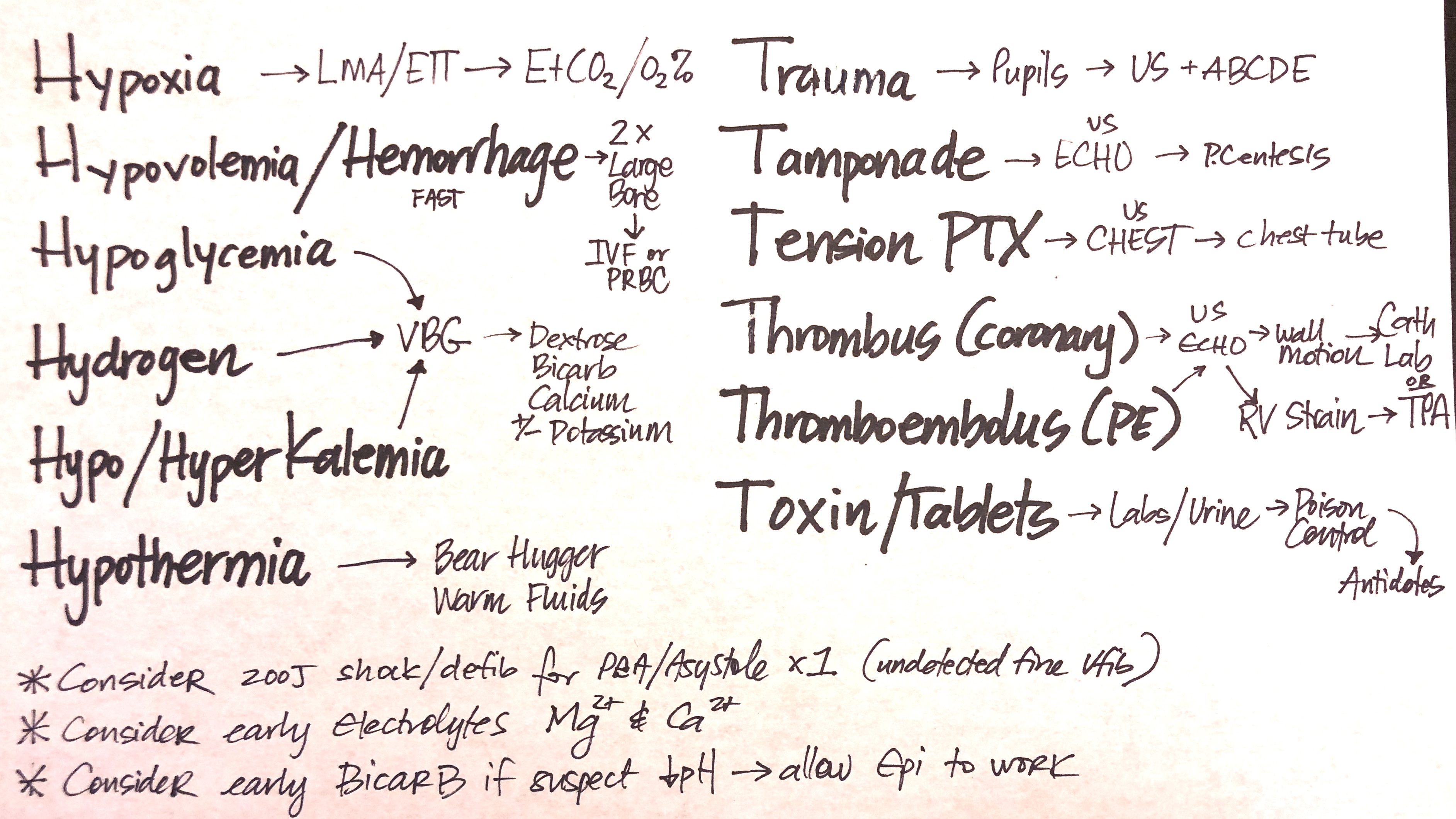
This is your job as the team leader running the code.
 EMCY
EMCY 